

The final lecture in the ICA’s 2021 Great Texts/Big Questions Online Lecture Series
-
- 15 June 2021

The final lecture of Great Texts/Big Questions
Great Texts/Big Questions places us in space to learn from and converse with the Father of Decolonising the Mind, Ngugi wa Thiong’o. The last and final lecture of the Great Texts/Big Questions series will be hosted by him with a focus on how the pandemic affected people within creative spaces. In relation to the series’ theme, Loss upon loss, his lecture will offer a narrative and open the floor to discussing the relationship between language and the African’s mind. The lecture is titled Language and liberation of the African inventive imagination. It will be held on June 17 2021 at 19:00 on Zoom. Be a part of the conversation here: https://uct-za.zoom.us/j/97555353518
To find out more about the series and the lecture itself, read below.
About
One of the most prolific and influential thinkers of our time, Ngugi wa Thiong’o burst onto the literary scene with the performance of his first major play, The Black Hermit, at the National Theatre in Kampala in 1962. In a highly productive literary period, Ngugi wrote additionally eight short stories, two one act plays, two novels, and a regular column for the Sunday Nation under the title, “As I See It”. The novel Weep Not Child was published to critical acclaim in 1964 followed by a second novel, The River Between (1965). His third, A Grain of Wheat (1967), was a turning point in the formal and ideological direction of his works. His first volume of literary essays, Homecoming, appeared in print in 1969. These were to be followed, in later years, by other volumes including Writers in Politics (1981 and 1997); Decolonising the Mind (1986); Moving the Center (1994); and Penpoints, Gunpoints, and Dreams (1998).
Sharply critical of the inequalities and injustices of Kenyan society, Ngugi was arrested and imprisoned without charge at Kamiti Maximum Security Prison at the end of 1977. His memoir, Detained: A Writer’s Prison Diary (1982), is an account of those experiences.
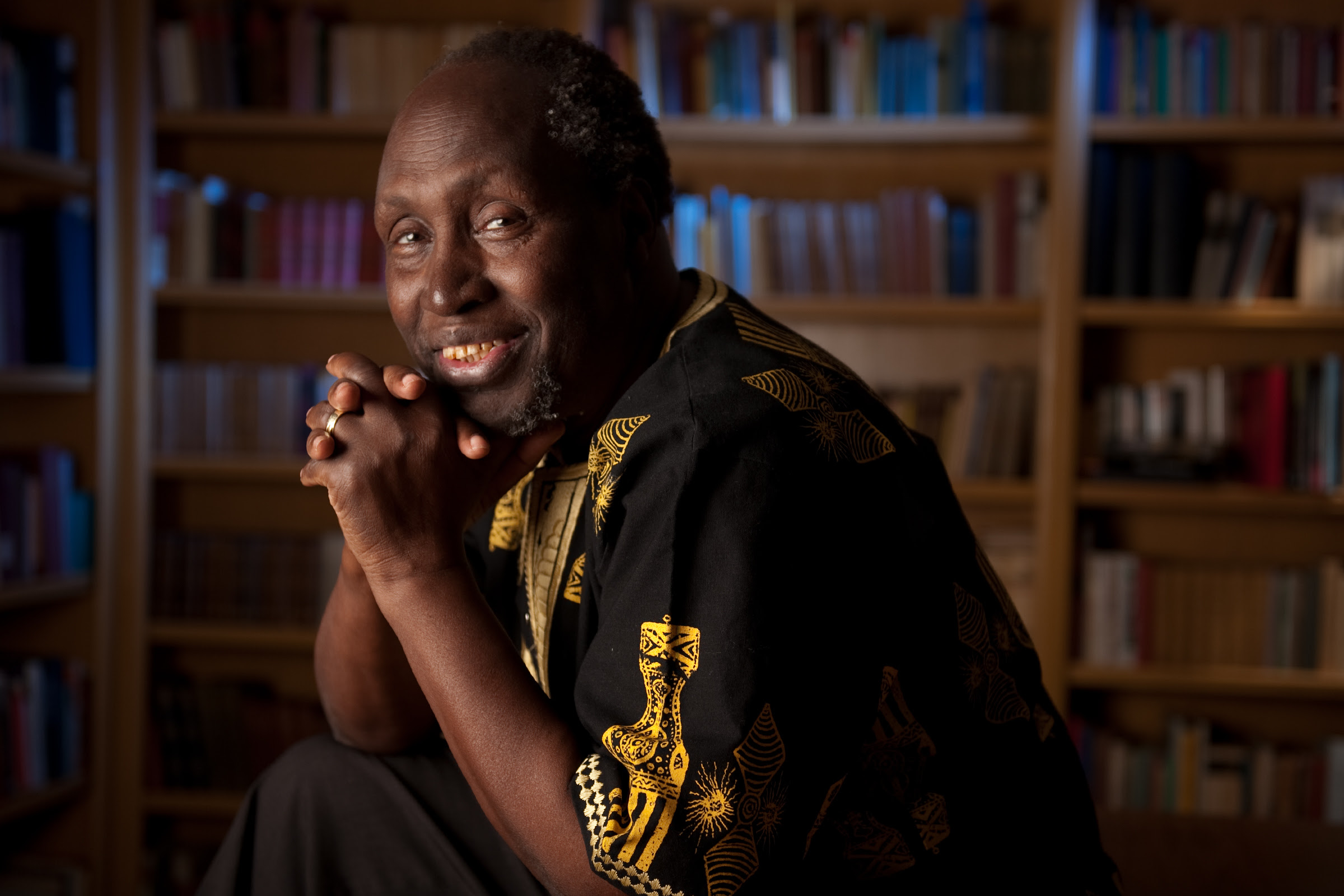
Kenyan author Ngugi wa Thiong’o, Distinguished Professor of English and comparative literature at UC Irvine, is on the short list for the 2010 Nobel Prize in literature, for xxx(add phrase or blurb here from award announcement; Chancellor quote? Christine writing and getting approved quote).Ngugi, whose name is pronounced “Googy” and means “work,” is a prolific writer of novels, plays, essays and children’s literature. Many of these have skewered the harsh sociopolitical conditions of post-Colonial Kenya, where he was born, imprisoned by the government and forced into exile.His recent works have been among his most highly acclaimed and include what some consider his finest novel, “Murogi wa Kagogo” (“Wizard of the Crow”), a sweeping 2006 satire about globalization that he wrote in his native Gikuyu language. In his 2009 book “Something Torn & New: An African Renaissance,” Ngugi argues that a resurgence of African languages is necessary to the restoration of African wholeness.“I use the novel form to explore issues of wealth, power and values in society and how their production and organization in society impinge on the quality of a people’s spiritual life,” he has said.
After Amnesty International named Ngugi a Prisoner of Conscience, an international campaign secured his release in December 1978. However, the Moi Dictatorship barred him from jobs at colleges and universities in Kenya. In exile, Ngugi worked with the London based Committee for the Release of Political Prisoners in Kenya (1982-1998). In 1992 he became Professor of Comparative Literature and Performance Studies at New York University, and from there moved to his present position at the University of California. Ngugi has continued to write prolifically. He is the recipient of numerous honours, including the 2001 Nonino International Prize for Literature, as well as ten Honorary Doctorates.
Facilitator
The event will be facilitated by academic Polo Moji, and the lecture will be followed by a Q&A with online viewers.
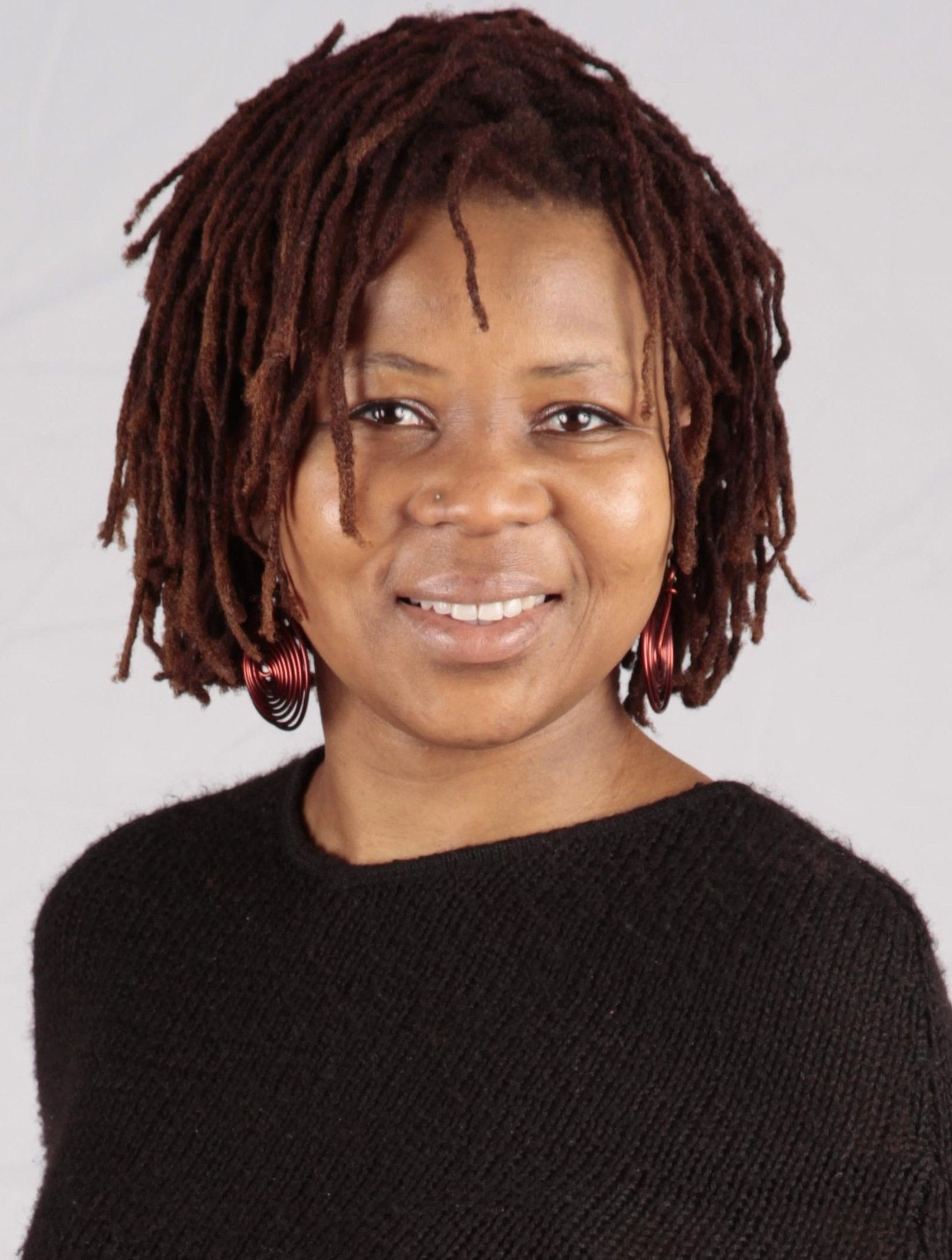
Moji joined the Department of English Literary Studies at UCT in 2018, after lecturing French and Francophone Studies at the University of the Witwatersrand (2015-2018). Moji is one of the few researchers in South Africa working with both English and French/Francophone literary forms. She has co-edited the special journal issues “Ghostly Border-Crossings: Europe in Afrodiasporic Narratives” in Tydskrif vir letterkunde: A Journal for African Literature (2019), “The Cinematic City: Desire, Form and the African Urban” in The Journal of African Cinemas (2019) and the forthcoming special issue in Cinematic Imaginaries of the African City, Social Dynamics (2021). Her current book project is Gender and the Geopolitics of Blackness in Contemporary AfroFrench Narratives: Black Flâneuses and she is co-organiser of the forthcoming African Feminisms Conference (November 2021).
The 2021 Great Texts/Big Questions Lecture Series – Loss upon loss – responds to the complexity of grief and grieving in South Africa and across the continent in the time of Covid-19, with a particular focus on the role and response of artists.The most critical months of the pandemic have been defined by a near disintegration of cultural and familial rituals for mourning, gathering and coming to terms with death – individually, but especially collectively. A period in which, in so many communities, the deaths of loved ones have followed in such quick succession that there is no ordinary time or proper space to mark their passing. There have been other losses too – jobs, careers, financial security – equally without closure or the promise of resolution. And in the wake of both, a new vocabulary has quickly become part of our everyday speech: Zoom memorials, virtual funerals followed with alarming speed, deep cleaning, lockdowns, social distancing, masks.The vision for the series draws from the concept of ‘ambiguous loss’ – a term that academic and therapist Pauline Boss coined in the 1970s to name and describe a rupturing of human relationships without closure or clear understanding. Ambiguous loss has since been applied widely across the world in approaching forms of grief that cannot be resolved. In the context of the pandemic, the term provides a possible starting point of collective recognition and reckoning, and opens pathways to healing. Schedule for the Series
- Wed 12 May @ 1pm: Zukiswa Wanner, Creativity in the face of crisis
- Wed 19 May @ 1pm: Yewande Omotoso, Death: unfathomable, inevitable
- Wed 26 May @ 1pm: Athambile Masola, Grieving: surviving imiphanga through a black aesthetic
- Wed 2 June @ 1pm: Lebo Mashile, Crisis catalysing creativity as rituals and as resistance
- Wed 9 June @ 1pm: Percy Mabandu, A Call to artistry: Catharsis, and creative grammars against grief
- Thursday 17 June @ 7pm (please note change in start time): Ngugi wa Thiong’o, Language and liberation of the African inventive imagination
Join us this Thursday 17 June at 7pm.